
Ulcerative Colitis
A type of inflammatory bowel disease that causes inflammation and ulcers in the lining of the colon and rectum. Many people with UC lead full, active lives with the right treatment.

What is Ulcerative Colitis?
Ulcerative colitis (UC) is a long-term condition where the lining of the large bowel — the colon and rectum — becomes inflamed. Small sores (ulcers) can form on the lining, which may bleed and produce mucus.
UC can occur at any age and is often first diagnosed in younger adults. Most people have times when symptoms flare up, followed by periods of remission when they feel well.
Key fact: Ulcerative colitis always begins in the rectum and can spread part or all of the way up the colon. Unlike Crohn's disease, it affects only the colon and rectum, and only the inner lining.
How far UC extends
UC always starts in the rectum. How far it spreads up the colon varies between individuals:
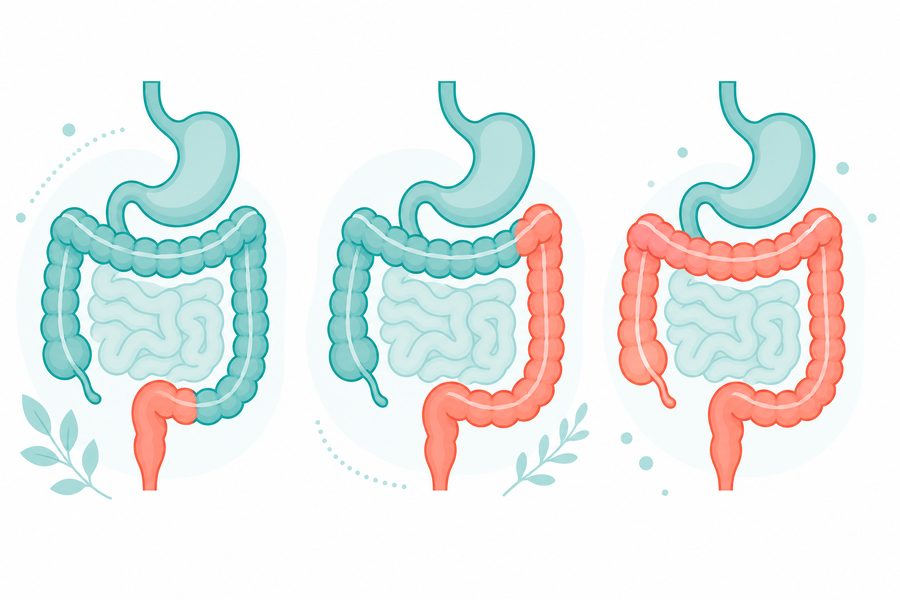
Proctitis
Inflammation limited to the rectum only
Left-sided colitis
Inflammation extends from the rectum up the left side of the colon
Extensive / Pancolitis
Inflammation affects most or all of the colon
Symptoms
Symptoms can vary depending on how much of the colon is affected and how active the inflammation is:
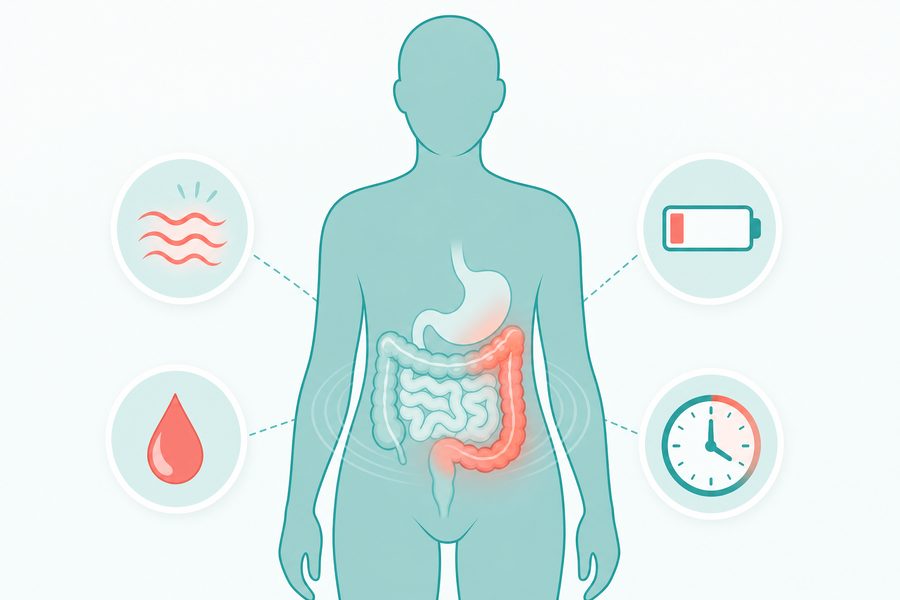
- Diarrhoea, often containing blood or mucus
- An urgent and frequent need to empty the bowel
- Tummy pain and cramping, often eased by passing a stool
- A feeling of needing to go even when the bowel is empty (tenesmus)
- Tiredness, weight loss and reduced appetite during flares
When to seek help: Seek urgent advice if you have a severe flare — for example frequent bloody stools, a fever, a racing heart or significant tummy pain.
Causes & risk factors
UC develops from a combination of factors, rather than one single cause:
Genetics & family history
More common if a close relative has IBD
The immune system
An over-active immune response in the gut lining
The gut microbiome
The community of bacteria living in the bowel
Environmental factors
Lifestyle and environmental triggers may play a role
Diagnosis
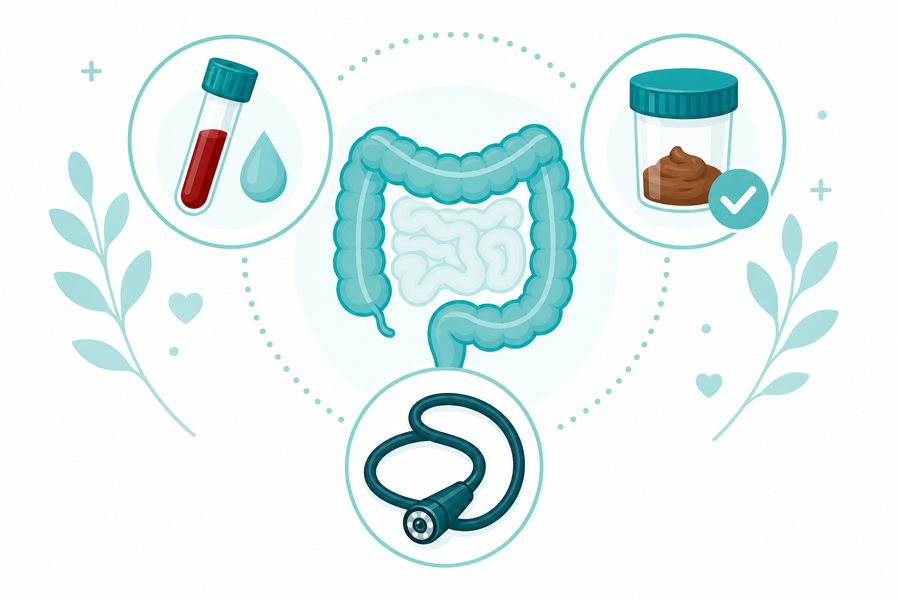
Your doctor may use several tests to diagnose UC and understand how much of the colon is affected:
Treatment & management
The aim is to bring flares under control, then keep the bowel healed and in remission.
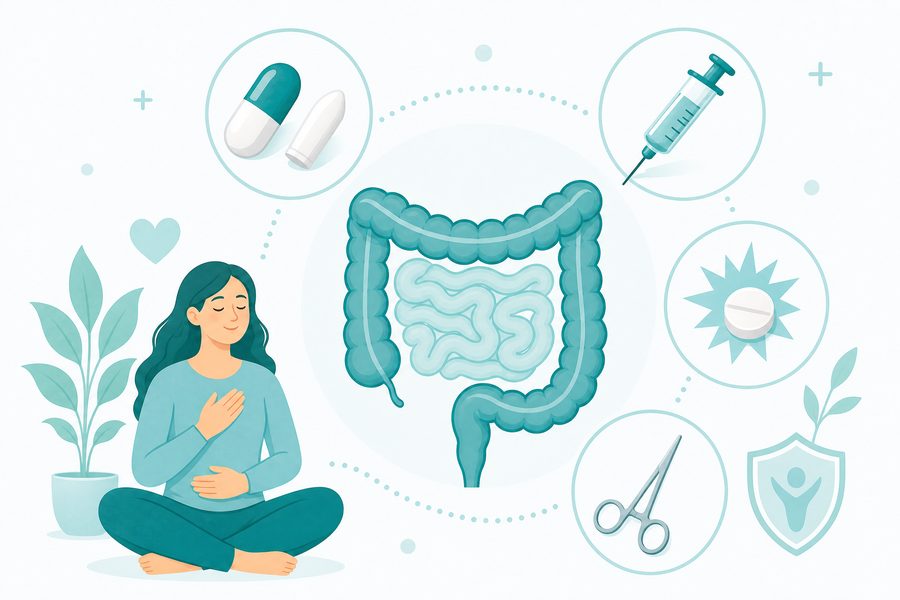
Aminosalicylates / 5-ASAs
Often the first-line treatment (e.g. mesalazine or sulfasalazine), taken by mouth or as an enema/suppository
Steroids
Short courses to settle a flare (e.g. prednisolone or budesonide)
Immunosuppressants & biologics
For more active or hard-to-treat disease (e.g. azathioprine, infliximab, adalimumab or vedolizumab)
Surgery
Removing the colon can cure UC and is an option for some people
Living with Ulcerative Colitis
Many people with UC lead full, active lives. Here are some things that can help keep things stable:

Take maintenance treatment as prescribed — even when you feel well
Attend regular reviews — stay in touch with your specialist team
Know your warning signs — recognise when a flare may be starting
Look after sleep, stress and diet — these all help keep things stable
References & further reading
- NHS. Ulcerative colitis. nhs.uk
- NICE NG130. Ulcerative colitis: management. nice.org.uk
- Crohn's & Colitis UK. Ulcerative colitis. crohnsandcolitis.org.uk
This page is for general information and does not replace advice from your doctor or specialist team.
Latest articles on Ulcerative Colitis
Explore related conditions
Learn more about IBD and other related conditions