
Microscopic Colitis
Inflammation of the colon that can only be seen under a microscope. A common and treatable cause of ongoing watery diarrhoea, particularly in older adults.

What is Microscopic Colitis?
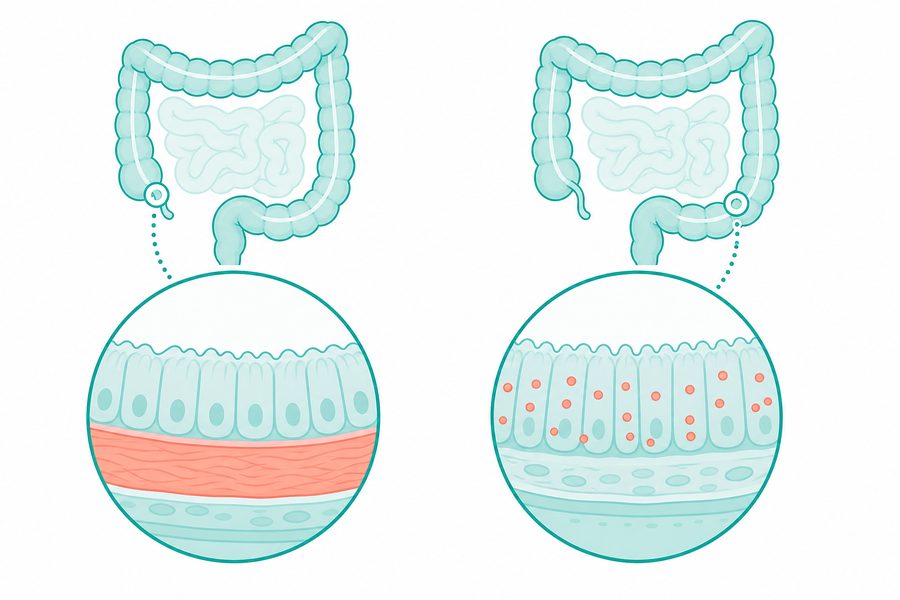
Microscopic colitis is a type of inflammatory bowel disease affecting the large bowel. Its defining feature is that the colon usually looks completely normal during a colonoscopy. The inflammation only shows up when a small tissue sample (a biopsy) is examined under a microscope.
Because the bowel looks normal, it is often mistaken for irritable bowel syndrome. It is a common and treatable cause of ongoing watery diarrhoea, particularly in older adults.
Key fact: Microscopic colitis is more common in women, especially over the age of 60, and is confirmed by taking a biopsy even when the colon looks normal.
Subtypes
There are two main subtypes of microscopic colitis. The two subtypes cause similar symptoms and are generally treated in the same way.
| Subtype | What's different under the microscope |
|---|---|
| Collagenous colitis | A thickened band of collagen forms just beneath the lining of the colon |
| Lymphocytic colitis | An increased number of white blood cells (lymphocytes) in the colon lining |
Symptoms
The main symptom is chronic watery diarrhoea that is not bloody:
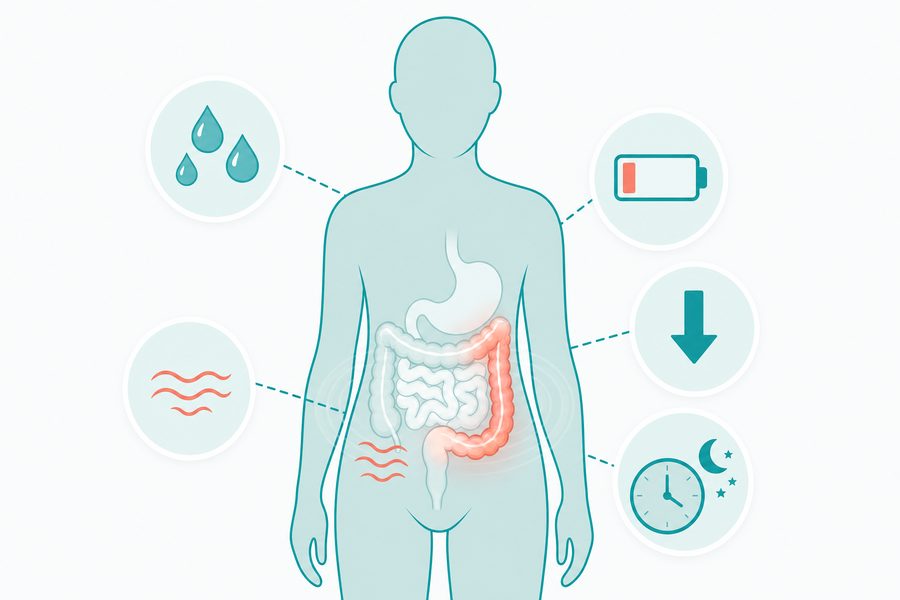
- Chronic watery diarrhoea that is not bloody
- An urgent need to empty the bowel, sometimes at night
- Tummy pain or cramps
- Faecal incontinence in some people
- Tiredness and mild weight loss
Causes & risk factors
The exact trigger isn't fully understood, but it is thought to involve the immune system reacting to something passing through the bowel. Microscopic colitis is more likely in people with these known associations:
Being female and over 60
The condition is significantly more common in women, particularly after the age of 60
Autoimmune conditions
Such as coeliac disease, thyroid disorders and rheumatoid arthritis
Certain medicines
Including some anti-inflammatory painkillers (NSAIDs), acid-reducing drugs (PPIs) and some antidepressants (SSRIs)
Diagnosis
Diagnosis relies on a colonoscopy with biopsies. Even when the bowel looks normal, the laboratory findings confirm the type. Blood and stool tests help rule out other causes such as coeliac disease or infection.

Why it can be missed: A normal-looking colonoscopy can be falsely reassuring. In anyone with persistent watery diarrhoea, taking biopsies is the key step that confirms the diagnosis.
Treatment & management
Symptoms often settle with treatment, though they can come back and may need a further course:

Budesonide
A targeted steroid, usually the first-line treatment and works well for most people
Medicine review
Reviewing any medicines that may be contributing to symptoms
Anti-diarrhoeal medicines
For milder symptoms, such as loperamide
Dietary adjustments
Simple changes to diet that may help manage symptoms
References & further reading
- Guts UK Charity. Microscopic colitis. gutscharity.org.uk
- British Society of Gastroenterology guidelines on microscopic colitis. bsg.org.uk
- NHS. Colitis. nhs.uk
This page is for general information and does not replace advice from your doctor or specialist team.
Explore related conditions
Learn more about IBD and other related conditions