
Colorectal Cancer
Cancer that develops in the colon or rectum, often growing slowly from small growths called polyps. Early detection through screening saves lives.
What is Colorectal Cancer?
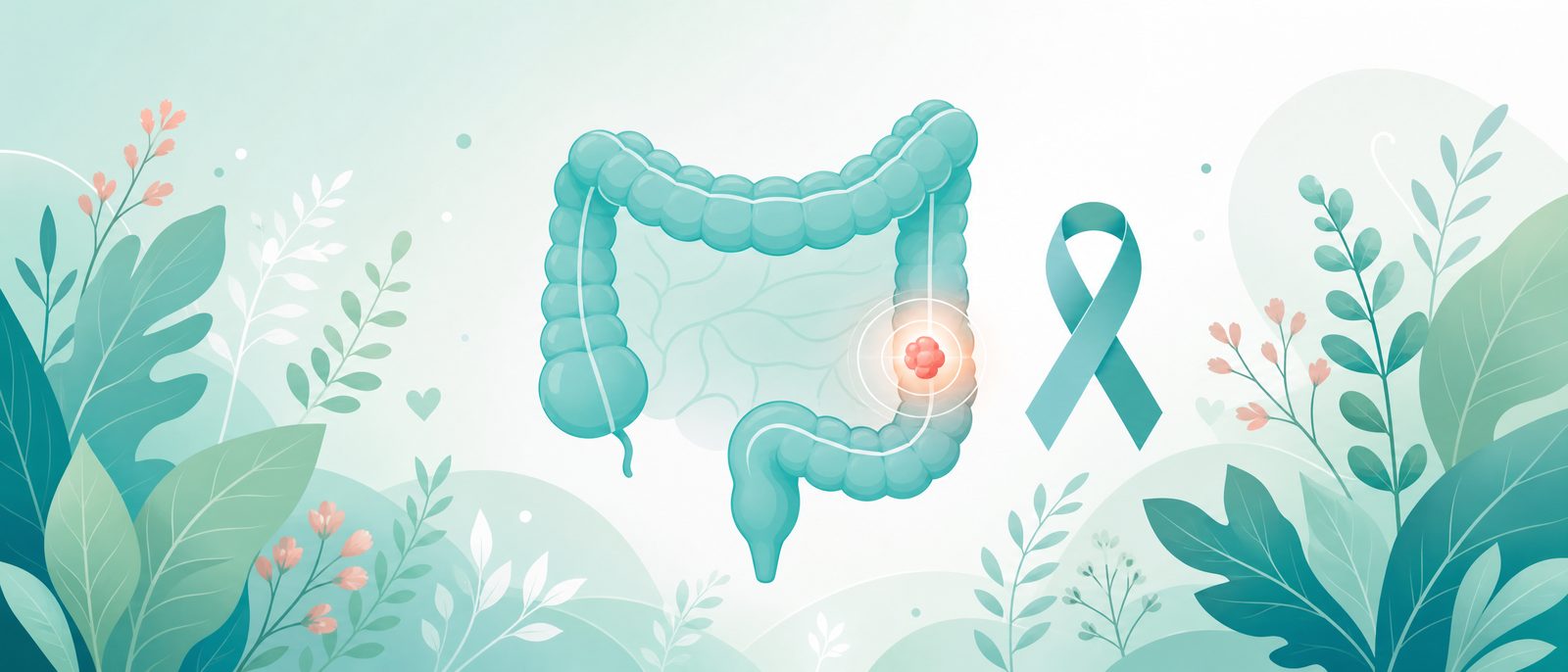
Colorectal cancer, also called bowel cancer, starts in the large bowel (colon) or back passage (rectum). Most bowel cancers develop slowly from small growths called polyps on the bowel lining.
Not all polyps become cancer, and finding and removing them — often during screening — can stop a cancer from ever forming.
Key fact: Most bowel cancers grow slowly from polyps. Finding and removing polyps during screening can prevent cancer from developing.
Symptoms
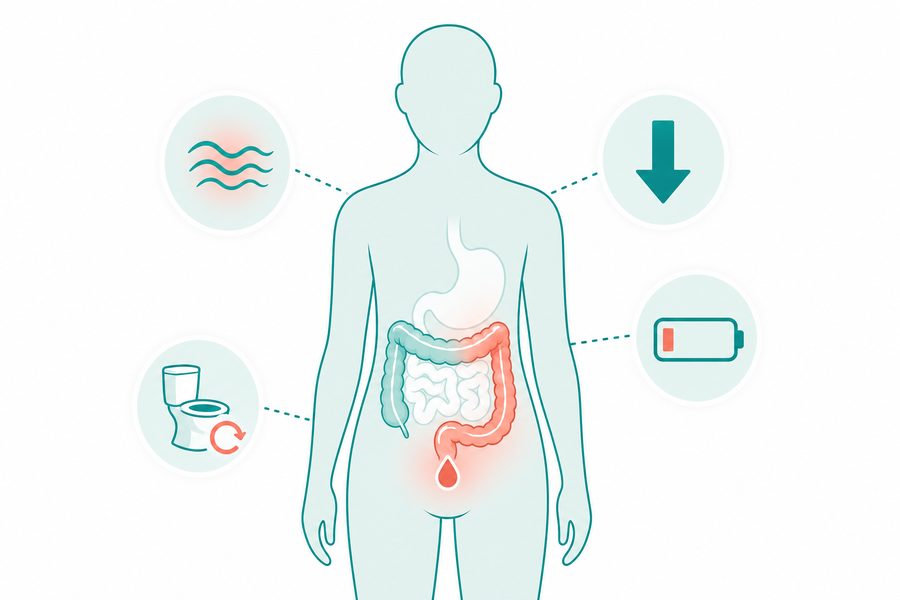
- Bleeding from the back passage, or blood in the stool
- A lasting change in bowel habit, looser stools, or going more often
- Tummy pain, bloating or discomfort, especially after eating
- Unintended weight loss
- Tiredness or breathlessness from unexplained anaemia
Don't panic: Most of the time these symptoms are caused by something far less serious than cancer. If they last more than a few weeks, see your GP.
Risk factors
Several factors can increase the risk of developing bowel cancer:
Age
Risk rises from around the age of 50
Family history
A family history of bowel cancer, or certain inherited conditions
Inflammatory bowel disease
A long history of IBD increases the risk over time
Lifestyle
Diets high in red and processed meat and low in fibre, being overweight, smoking and drinking a lot of alcohol
Screening
Screening looks for early signs of cancer in people who have no symptoms. This is the single most effective way to catch bowel cancer early.
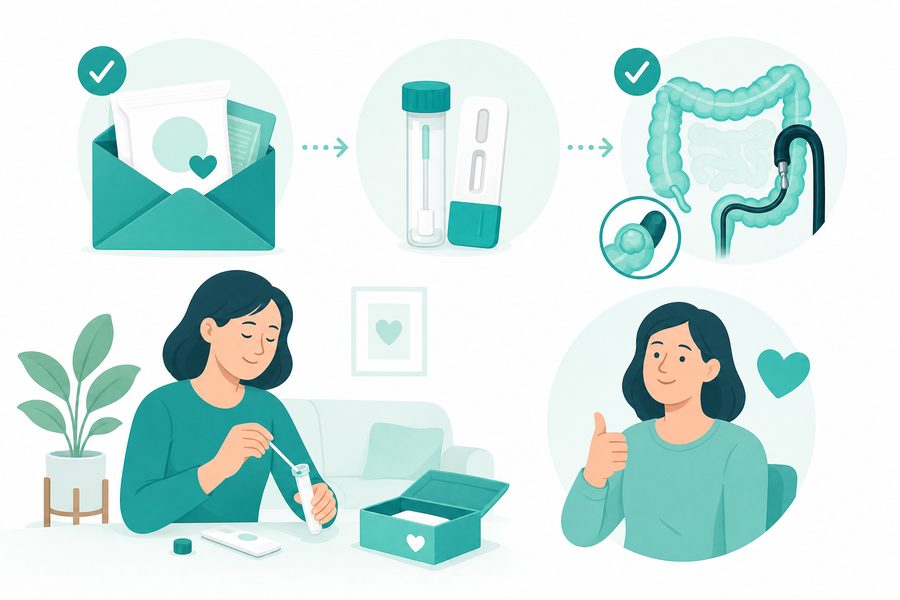
Kit arrives by post
An NHS bowel screening kit is posted to eligible adults within the screening age range
FIT test at home
The faecal immunochemical test takes a few minutes and detects tiny traces of blood
Colonoscopy if needed
If the test is positive, a colonoscopy examines the bowel and can remove polyps
If you receive a screening kit, use it. It takes only a few minutes at home and can detect changes long before any symptoms appear.
Diagnosis
If bowel cancer is suspected, the main test is a colonoscopy, which lets the bowel be examined and biopsies taken.
Scans such as CT then check the size of the cancer and whether it has spread (its stage), which guides treatment.
Treatment
Treatment depends on where the cancer is, its stage and a person's general health. The main options, often used in combination, are:
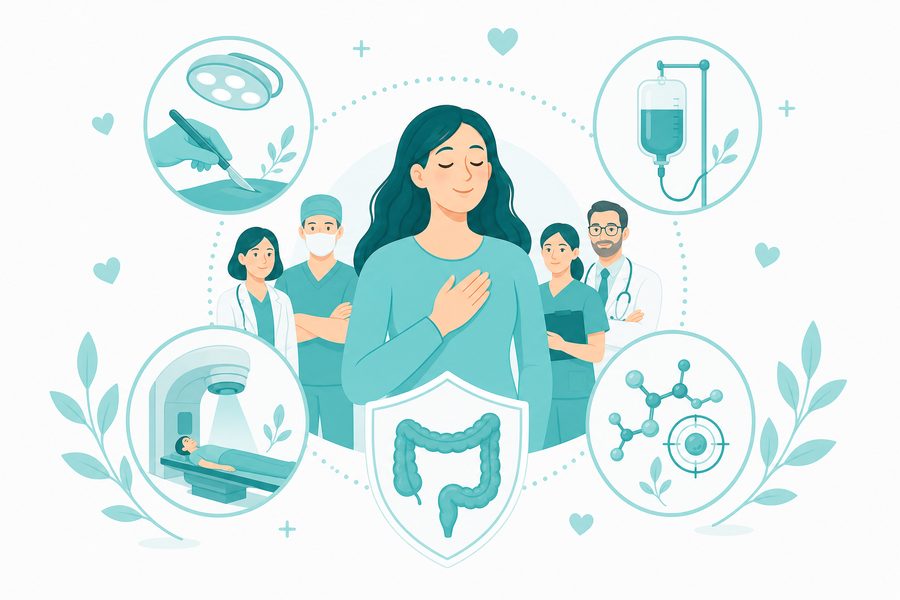
Surgery
To remove the affected part of the bowel — the most common treatment
Chemotherapy
Medicines that kill cancer cells, often given after surgery
Radiotherapy
Particularly for rectal cancer, using radiation to target cancer cells
Targeted & immunotherapy
Newer medicines for some cancers that target specific cell changes
Prevention
You can lower your risk with healthy lifestyle choices:

- Eating plenty of fibre, fruit and vegetables
- Limiting red and processed meat and alcohol
- Keeping to a healthy weight
- Staying physically active
- Not smoking
- Taking part in screening when invited
References & further reading
- NHS. Bowel cancer. nhs.uk
- NHS. Bowel cancer screening. nhs.uk
- Bowel Cancer UK. bowelcanceruk.org.uk
- Cancer Research UK. Bowel cancer. cancerresearchuk.org
This page is for general information and does not replace advice from your doctor or specialist team.
Explore related conditions
Learn more about other GI conditions